
Teaching Students How to Learn:
When Learning Strategies Make the Difference
For a long time, education has taken for granted that students will learn how to study on their own. However, simply observing how they prepare for exams shows that this is not always the case. Rereading notes, highlighting entire pages, or cramming the night before an exam are common practices among adolescents. Yet although these methods often create a sense of familiarity with the material, research has shown for decades that their effectiveness is limited.
27 de mayo de 2024

The cognitive sciences have transformed our understanding of how we learn. We now know that some study strategies promote deeper and more durable learning than others. Techniques such as retrieval practice—the act of trying to recall or apply what has been learned—or spaced practice—spacing study over time—have repeatedly been shown to be effective. In contrast, the strategies most popular among students contribute far less to consolidating knowledge.
Despite the strength of this evidence, these strategies are rarely taught explicitly in schools. This raises a key question: What happens when we teach students which strategies can help them learn more effectively and encourage them to use them?
A recent study conducted in a secondary school in the province of Barcelona, Spain, offers a promising answer. Its findings suggest that teaching learning strategies grounded in cognitive science can significantly improve students’ academic performance, especially in the long term.
Why Learning Strategies Matter
Learning is not simply a matter of being exposed to information. For knowledge to be consolidated, students need to engage actively in processing it. Learning strategies play a key role in this process: they are the deliberate actions we use to understand, remember, and apply what we study.
Models of self-regulated learning show that students who plan their study, monitor their understanding, and adjust their study methods tend to achieve better academic outcomes. However, self-regulation does not emerge spontaneously; it requires knowledge and tools.
Over the last few decades, numerous studies have identified which strategies genuinely support learning. Among the most effective are:

- Retrieval practice, which involves actively trying to recall information without immediate support from study materials.
- Spaced practice, which involves distributing study over time rather than cramming it into a single session.
Both strategies share an important characteristic: they require greater cognitive effort than conventional study techniques. And that is precisely why they are more effective.
Cognitive Load Theory, meanwhile, highlights the importance of reducing mental effort that is unrelated to learning itself. When students study in environments full of distractions—background music, mobile phone notifications, or multitasking—a significant portion of their cognitive resources is devoted to managing those distractions. The result is less efficient learning.
In other words, learning effectively depends not only on what we do while studying, but also on when we do it and under what conditions.

A Study Conducted Under Real Classroom Conditions
To examine whether teaching learning strategies improves academic performance, a study conducted in a secondary school in Barcelona compared two cohorts of Year 9 students (2.º ESO): a control group (40 students, 2023–2024 academic year) and an experimental group (46 students, 2024–2025 academic year). Both groups followed the same curriculum, were taught by the same teachers, and used the same instructional materials. They were also assessed using the same Physics and Chemistry exams. The analysis controlled for variables such as students’ cognitive ability, study time, and prior knowledge.
The intervention was implemented by teachers at the school, who had previously completed a 15-hour training course on principles of cognitive science and learning strategies. Two key ideas were emphasized: retrieval practice and reducing distractions during study. Two advisory sessions were devoted to presenting these ideas using support materials provided by the researchers. Families were also informed to encourage these habits at home. In addition, posters highlighting learning strategies were used as periodic reminders.
The impact was assessed through three Physics and Chemistry tests: an initial assessment, a final exam, and the same exam administered again one week later without prior notice to measure retention. Students also completed questionnaires about how they had studied.
The results showed no initial differences between the groups, but the experimental group performed better on the final exam and showed an even greater advantage on the surprise test. After controlling for other variables, the intervention emerged as one of the most influential factors affecting performance, even surpassing the impact of cognitive ability on the delayed assessment.
Overall, these findings suggest that students in the experimental group improved their performance and achieved more durable learning—a pattern consistent with predictions from cognitive science. The questionnaires also indicated changes in study habits, including greater use of retrieval practice and fewer distractions while studying.
What Can We Learn From This Study?
This study offers several important lessons for teachers and schools.
1. Teaching Students How to Learn Has Real Effects
The findings suggest that teaching learning strategies in secondary education can improve academic performance and the quality of learning, especially when long-term retention is assessed.
2. Changing Habits Requires More Than Information
The intervention did not simply explain which strategies are more effective. It also addressed beliefs, expectations, and motivation, helping students understand why cognitive effort is necessary for learning.
3. Teachers Can Lead This Change
Because the intervention was implemented by teachers themselves, the study suggests that educational research can be brought into classrooms without requiring direct involvement from researchers.
4. Assessing Long-Term Learning Is Essential
Immediate grades do not always reflect genuine learning. Delayed assessments provide a much more accurate picture of what students have actually retained.
A Lever for Educational Equity
Perhaps one of the most interesting implications of this study concerns equity. Cognitive ability is relatively difficult to change, but learning strategies can be taught.
Relatively brief, low-cost interventions grounded in research can help many students study more effectively, develop deeper understanding, and retain what they have learned for longer.
In this sense, teaching students how to learn should not be viewed as an optional addition to the curriculum. It is likely one of the most powerful tools education has to improve learning outcomes for all students.
Discover what the lead author of the scientific article says about the study here.
Read the article here.
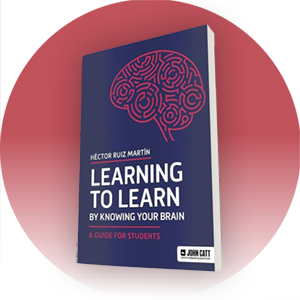
Learning to Learn by Knowing Your Brain
A Book That Helps Students Understand How Learning Works
Add the first book on learning strategies specifically written for secondary school students to your school’s reading plan and help your students strengthen their ability to learn how to learn.
What can you achieve by using this book in the classroom?
- Boost every student’s performance. All students can improve their academic outcomes by using learning strategies that truly work—strategies that are supported by scientific evidence and aligned with how the brain learns most effectively.
- Turn natural advantages into opportunities for everyone. By integrating learning strategies into classroom practice, you provide all students with a lasting, intentional set of tools to improve their study habits and consolidate their knowledge more effectively.
- Inspire students with the brain’s remarkable capacity for change. Show your students that every new concept they learn physically changes the structure of their brains, reinforcing the idea that their capacity to learn is adaptable, immense, and transformative.
RELATED POSTS
- Book: Learning to Learn by Knowing Your Brain by Héctor Ruiz Martín
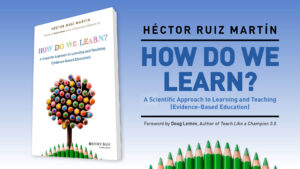
- Book: How Do We Learn? A Scientific Approach to Learning and Teaching by Héctor Ruiz Martín
- Research: Learning Strategies in Secondary School Students by ISTF
- Interview to Dylan Wiliam: Formative Assessment and Its Impact on Education by Héctor Ruiz Martín and Gemma Grau

The International Science Teaching Foundation (ISTF) is a non-profit organization committed to improving STEM education, headquartered in London and Barcelona. The ISTF is formed by more than 30 scientists, educators and experts who work tirelessly to improve science teaching worldwide. Its mission is to foster an international community of STEM educators with an active dedication and commitment.





Leave a Reply