
Coconut Crab: The Largest Land Arthropod on Earth
The coconut crab (Birgus latro) is the largest land arthropod in the world. Discover how it evolved from marine ancestors, how it breathes without gills, and why it cannot return to life in the water.
21 de mayo de 2024
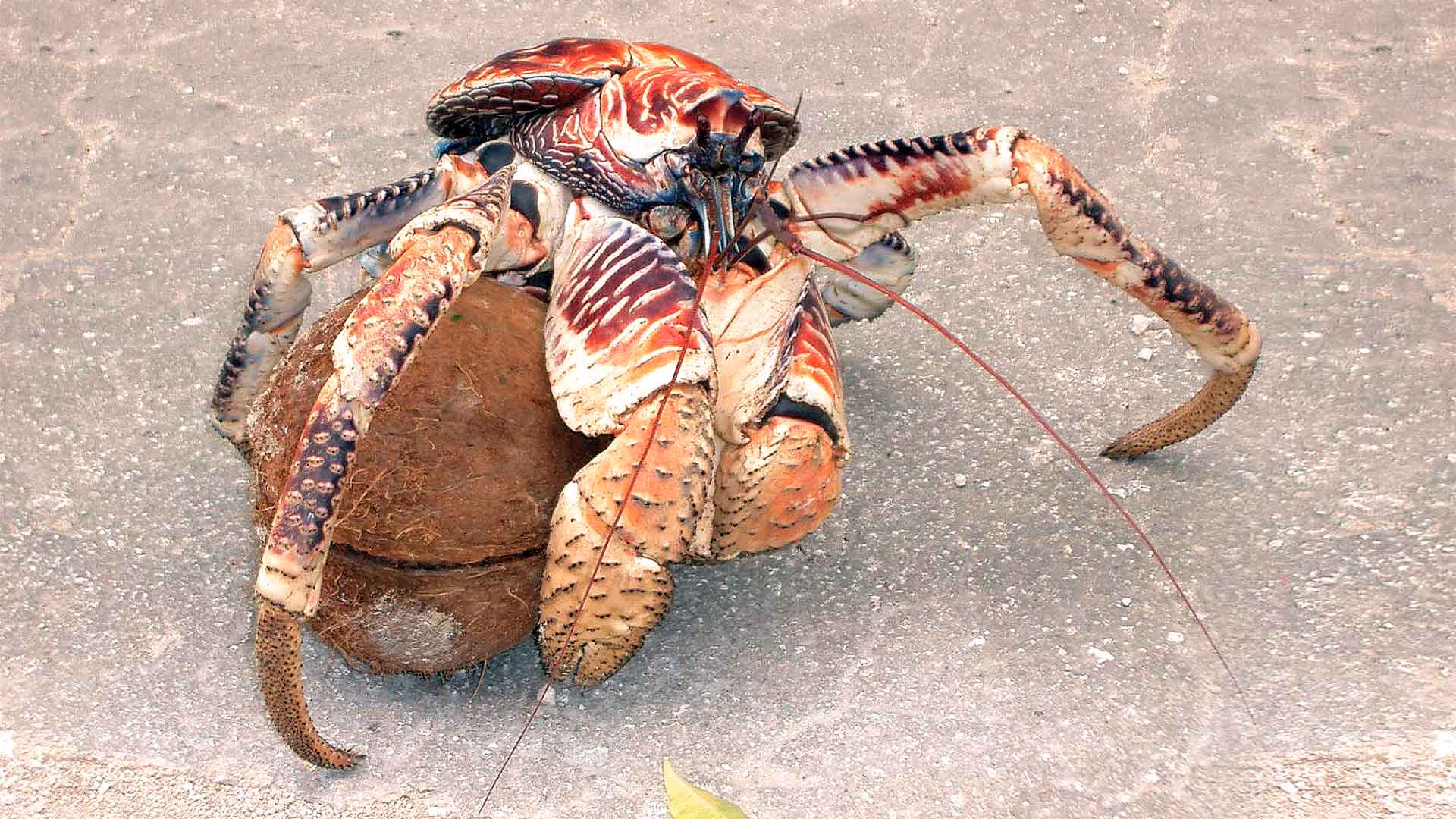
What Is the Coconut Crab? General Characteristics
If you go to the beach in the summer, you may spot a hermit crab just over half an inch long hurriedly dragging a seashell across the sand and retreating inside it when disturbed by your presence. However, if you are lucky enough to visit the beaches of tropical islands in the Indian or Pacific Oceans, you may be the one running for cover. Encountering the giant relative of the hermit crab can certainly have that effect.
The coconut crab is classified scientifically as Birgus latro and belongs to the order Decapoda, the same group that includes crabs, lobsters, and shrimps. What makes this species truly unique is that it is the only living representative of the genus Birgus, making it a biological rarity among terrestrial crustaceans.
Coconut Crab Size: How Big and How Heavy Does It Get?
The coconut crab, or Birgus latro, is a member of the hermit crab family that has evolved to enormous proportions, becoming the largest land arthropod in the world. It likely represents the upper size limit for a land-dwelling animal with an exoskeleton, a characteristic shared by arthropods such as insects, crustaceans, and arachnids. A coconut crab can reach nearly 1 meter in length and weigh up to 4 kilograms. Some reports even claim that individuals measuring up to 1.8 meters have been observed.
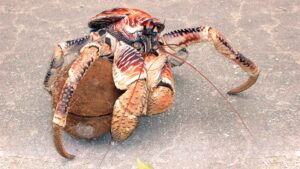
Its body is divided into two main parts: the cephalothorax, which is robust and armored, and the abdomen, which in adult specimens is fully calcified and no longer requires external protection. Coloration varies considerably between populations and individuals, ranging from deep blue to orange and reddish brown. It has five pairs of legs. The first pair has evolved into two large, asymmetrical claws, one larger than the other, used for feeding and defense alike.
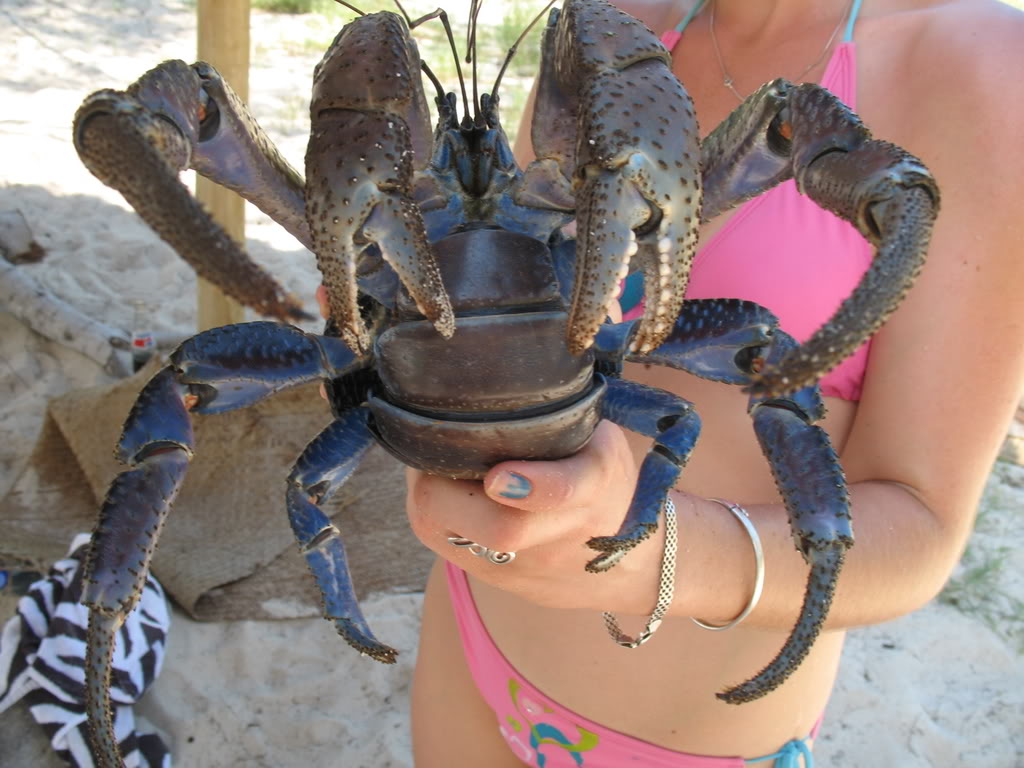
Size of an Coconut Crab.
From Hermit to Giant: How It Leaves Its Shell Behind
The coconut crab spends its early life much like any other hermit crab: living inside a protective shelter, usually a mollusk shell, and carrying it wherever it goes. Its abdomen is soft and needs protection. Young coconut crabs may also use coconut shells for shelter, but adult crabs eventually abandon external protection altogether. Instead, the exoskeleton covering their abdomen hardens. This not only provides greater protection but also helps reduce water loss, an essential adaptation for an animal that has left the aquatic environment. Giving up external shells likely made it possible for coconut crabs to grow so large. However, like all arthropods, they must shed their exoskeleton as they grow. After each molt, the new exoskeleton is soft and takes about a month to harden. During this vulnerable period, the crab remains hidden to avoid predators and other dangers.
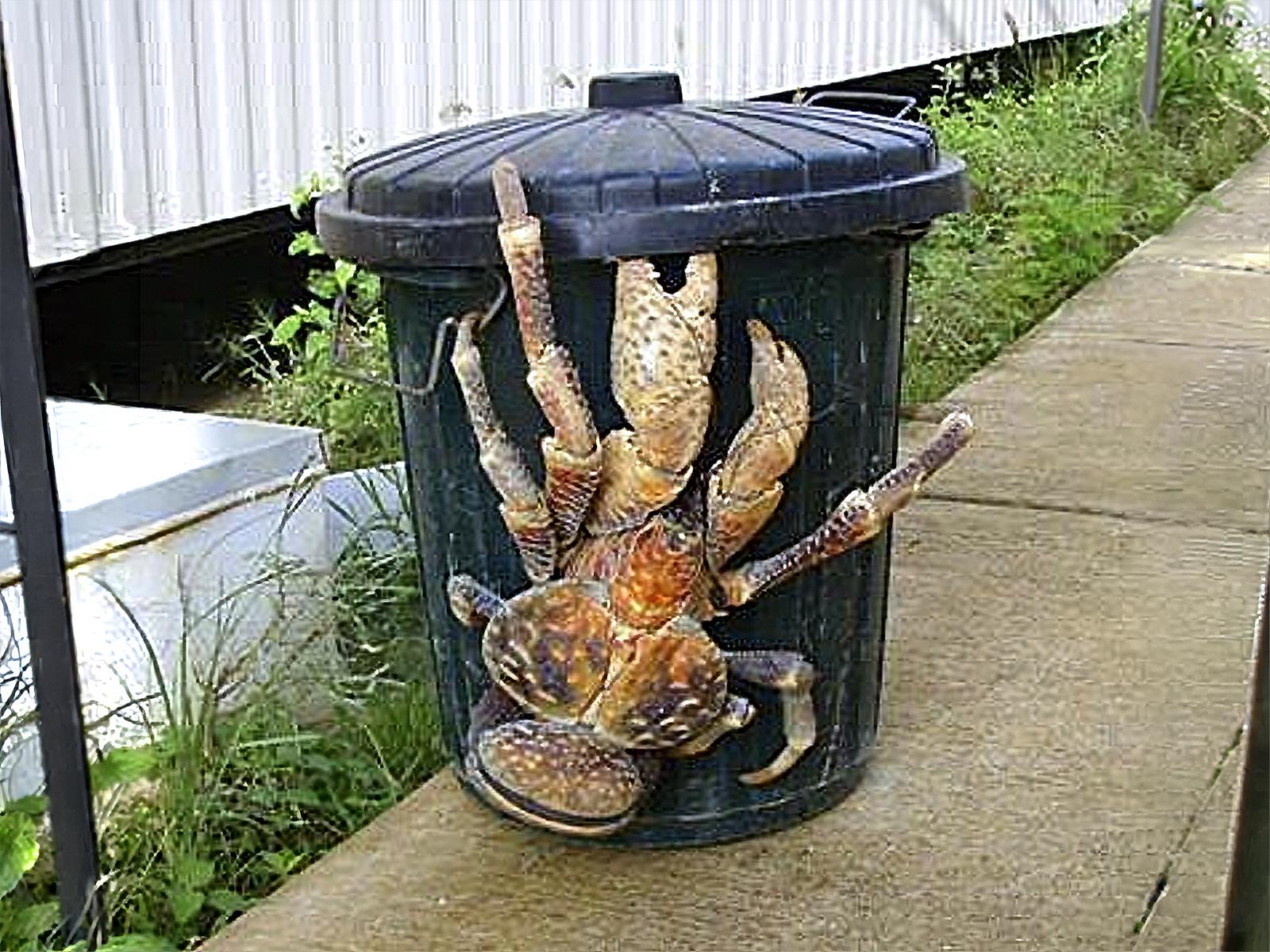
A huge coconut crab.
A Crab That Cannot Swim: Adaptations to Life on Land
If you ever encounter one of these crabs far from the shore, do not assume it is lost and return it to the water. Doing so would cause it to drown. The coconut crab has become so well adapted to life on land that it can no longer swim and cannot breathe underwater like its hermit crab relatives.
How Does the Coconut Crab Breathe? The Branchiostegal Lung
The respiratory system of the coconut crab is one of the most important evolutionary adaptations that allows it to live on land. It relies on a specialized organ called a branchiostegal lung, which is made of tissue very similar to the gills of its ancestors. However, this tissue has evolved to absorb oxygen from the air rather than from water. Located on the underside of the body, this organ is so important that two of the crab’s ten legs—like all decapods, it has ten legs—are specialized exclusively for cleaning it regularly and keeping it functioning properly. Of the remaining eight legs, six are exceptionally strong and are used for walking, climbing trees, and breaking into coconuts, one of the foods it feeds on—hence its name. This behavior is the source of its common name. The final two legs are used to hold and manipulate a shell during the crab’s juvenile hermit-crab stage.
The coconut crab is an extraordinary example of evolutionary adaptation to life on land. Studying this species connects directly to three key areas of biology taught in middle school: animal diversity, evolution, and physiological adaptations.
And with its habitat in decline, it also opens the door to exploring species conservation and the human impact on island ecosystems.
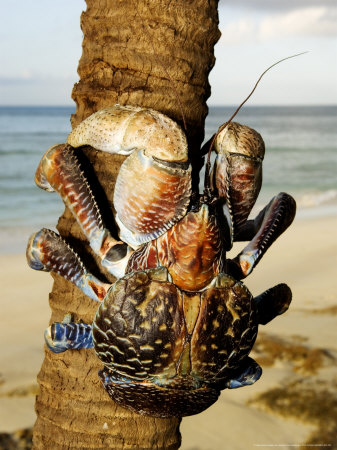
A Coconut Crab climbs a palm tree.
Coconut Crab Habitat: Where Does It Live?
The coconut crab inhabits tropical islands of the Indian Ocean and western Pacific, with particularly well-known populations in the Seychelles archipelago, as well as on numerous islands in Kiribati, Palau, and other areas of the Indo-Pacific.
It favors coastal environments with dense vegetation, rocky cliffs, and littoral forests, where it can find food and shelter easily. During the day it stays hidden in burrows or rock crevices, a key strategy for retaining body moisture in tropical climates where direct sunlight can dehydrate it rapidly.
Unfortunately, its range has shrunk considerably in recent decades. Human settlement, coastal development, and the introduction of predatory species to previously uninhabited islands have led to the disappearance of many populations from areas where they were once abundant.
What Does the Coconut Crab Eat?
The coconut crab is omnivorous, and its diet is far more varied than its name suggests. It feeds on coconuts, fallen fruit, seeds, carrion, and occasionally small animals. To locate food in the dark, it uses aesthetascs on its antennae, sensory structures that allow it to detect odors with extraordinary precision, comparable to that of many insects.
Its relationship with the coconut is what gives it its name: it is capable of opening these fruits by striking them repeatedly with its claws at the same weak point on the husk until it gains access to the flesh inside. It also consumes the shells and exoskeletons of other crustaceans, a source of calcium it needs to keep its own carapace strong.
Most strikingly, coconut crabs have been documented actively hunting small birds sleeping on low branches, an unusual predatory behavior that demonstrates the species’ remarkable dietary versatility.
How Strong Is the Coconut Crab?
The gripping force of its claws is one of the most impressive features of the coconut crab. Scientific studies have measured a closing force exceeding 3,300 newtons, a figure comparable to the bite force of some large predators and far greater than that of any other crustacean of similar size.
This power is concentrated in the first pair of legs, which has evolved into two asymmetrical claws: a larger, more robust one used to crush and open tough foods like coconuts, and a smaller one used for more precise tasks. This extraordinary strength also explains why the animal can cause serious injuries if handled carelessly.
Is the Coconut Crab Dangerous?
The coconut crab is not an aggressive animal by nature and does not seek confrontation with people. The risk arises mainly when someone attempts to catch or handle it without experience: given the force of its claws, a pinch can cause fractures in fingers and hands, and even deep wounds in cases of careless handling.
Outside that context, it poses no direct threat to humans. It does not attack spontaneously or chase people; its defensive behavior is triggered only when it feels threatened or cornered. The real danger, therefore, lies more with whoever handles it carelessly than with the animal itself.
Can You Eat the Coconut Crab?
Yes, the coconut crab is edible and is considered a delicacy on many islands of the Pacific and Indian Oceans, particularly in Kiribati and Palau. Its meat is typically prepared roasted or boiled, and in some island communities it is attributed with aphrodisiac properties, a belief that has contributed to growing demand in certain local markets.
Precisely because of that demand, human consumption is today the most direct threat to the species. The International Union for Conservation of Nature (IUCN) classifies the coconut crab as a vulnerable species globally, and its biology does not support rapid recovery: it takes between four and eight years to reach sexual maturity, though its lifespan can exceed 40 years, an exceptional figure among invertebrates.
This combination of slow growth, intensive capture, and loss of coastal habitat explains why its meat is expensive and scarce in many markets, and why some uninhabited islands have become critical natural refuges for maintaining viable populations over the long term.
The Coconut Crab on Video
This documentary footage shows coconut crabs in their natural habitat on Pacific islands: their real scale, how they open a coconut step by step, and how the female releases her larvae into the sea to begin their life cycle.
WRITTEN BY ISTF
Pictures & Illustrations credits
- Coconut Crab images – Wikimedia Commons






Leave a Reply